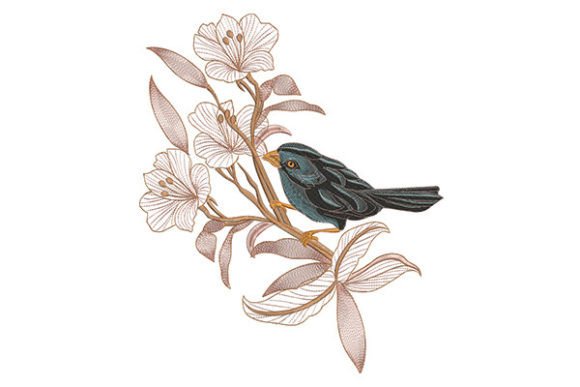
Birds in Flowers: A Designer’s Review for Personalized Gifts
As an embroidery designer who spends countless hours testing digital files before they ever reach a customer’s hoop, I approach every new machine embroidery design with a critical eye. It is not just about whether the file runs smoothly; it is about the emotional resonance of the final finished product. Recently, I loaded Birds in Flowers into my software to evaluate its potential for my personalized gift shop. The immediate impression was one of effortless charm. This is not a stiff or overly complex pattern; rather, it feels organic, sweet, and inviting.
The mood of Birds in Flowers strikes a delicate balance between playful and elegant. For those of us creating handmade products, finding designs that appeal to a broad audience without feeling generic is a challenge. This design succeeds because it taps into a timeless appreciation for nature. The interplay between the avian figures and the surrounding botanical elements creates a narrative of peace and joy. It feels distinctly handmade, avoiding the sterile look that sometimes plagues mass-produced items. Whether you are an Etsy seller looking to expand your nursery collection or a craft fair vendor needing reliable best-sellers, this design offers significant versatility.
Visual Appeal and Emotional Connection
When I first viewed the preview, I noticed the flow of the composition. The birds are not merely perched; they seem integrated into the floral arrangement, suggesting movement and life. This level of detail is crucial for custom embroidery projects where the buyer is paying for a unique sentiment. The design does not overwhelm the fabric but enhances it. For a wedding gift, such as a monogrammed handkerchief or a guest book cover, the romantic undertones of flowers paired with the symbolism of birds—often representing partnership and freedom—create a powerful emotional hook.
In terms of aesthetics, the design leans towards a classic yet modern feel. It is not overly vintage, nor is it starkly contemporary. This neutrality is a strength. It allows the piece to fit into various home decor styles, from farmhouse kitchens to modern minimalist nurseries. When stitched, the result is gorgeous and elegant, exactly as promised in the product description. The "fun and easy to stitch" claim holds up during the simulation phase, suggesting that the pathing is logical and likely to minimize thread breaks and jumps.
Versatility Across Product Lines
One of the strongest assets of Birds in Flowers is its adaptability. I tested how it would translate across different small shop products. For baby embroidery, imagine this design on a soft muslin swaddle or a burp cloth. The gentle imagery is perfect for a nursery, offering a soothing visual for infants while providing parents with a cherished keepsake. However, when applying it to baby items, one must consider the fabric texture and stretch. Delicate details can get lost if the fabric is too fuzzy or if the stabilizer is not chosen correctly.
For kitchenware, an embroidered towel featuring this motif becomes an instant heirloom. It elevates a simple cotton towel into a thoughtful housewarming present. Similarly, on a canvas tote bag, the design adds a touch of artisanal flair that appeals to eco-conscious shoppers. I also envision this working beautifully on pillow covers, where the central placement of the birds can serve as a focal point in a living room setting. For aprons, it adds a whimsical touch that chefs and home cooks alike would appreciate.
Strategic Placement and Fabric Considerations
While the design is robust, there are areas where caution is necessary. As a designer, I always advise checking the stitch density relative to the fabric weight. On thick terry cloth towels, the finer details of the flower petals might sink into the pile if the density is too low or if the stabilizer is insufficient. Conversely, on lightweight silks or sheer curtains, a high-density fill could cause puckering. Always test on scrap fabric that matches your final material.
Curved surfaces, such as the toe of a sock or the collar of a baby onesie, require careful hooping. The design should be centered precisely to avoid distortion. Additionally, when working with dark fabrics, ensure that your thread colors provide enough contrast. A dark blue bird on a black background will vanish, ruining the visual impact. Use a printable mockup or digital simulation to check color combinations before committing to the final stitch-out.
Enhancing Perceived Value and Trust
From a business perspective, Birds in Flowers contributes significantly to perceived value. Customers often associate intricate, well-executed embroidery with higher quality. When they see a cohesive design where the birds and flowers harmonize, they trust the craftsmanship. This trust translates into repeat business and positive reviews. For digital embroidery file sellers, offering a design that looks professional even at smaller sizes can differentiate your shop from competitors.
Product photography plays a vital role here. Because the design is elegant, it photographs well under natural light. Highlighting the texture of the threads and the slight sheen of the satin stitches can make online listings more engaging. Buyers want to feel the softness and see the precision through their screens. A well-stitched sample of Birds in Flowers can serve as a flagship image for your store, drawing in customers who appreciate attention to detail.
Practical Technical Notes for Makers
Before running this design on a customer order, there are several practical steps to ensure success. First, confirm the hoop size required. While the description notes it is easy to stitch, fitting it into the correct hoop ensures the design remains centered and taut. Second, review the license terms. If you are selling commercial embroidery items, ensure your purchase of the embroidery file includes commercial use rights. Never assume; always check the documentation provided by the designer.
Stabilizer choice is non-negotiable. For woven fabrics like cotton or linen, a cut-away stabilizer provides long-term durability, especially for items like blanket embroidery that will be washed frequently. For knit fabrics, a tear-away might suffice, but test for stability. Also, pay attention to the small details after stitching. Trim any loose jump stitches carefully to maintain a clean finish. If the design includes small lettering or fine lines, ensure your needle is sharp and your tension is balanced to prevent thread shredding.
Finally, consider the washing instructions for the end user. Embroidery adds thickness and can react differently to heat than the base fabric. Advise your customers to wash embroidered items inside out in cold water to preserve the vibrancy of the thread colors and the integrity of the stitches. By treating Birds in Flowers with the care it deserves, you create a personalized gift that lasts for years, bringing joy to the recipient and credibility to your brand.